


How Are Commercial Wood Doors Constructed?
Commercial wood doors are typically constructed using a combination of materials and techniques designed for durability, performance, and aesthetic appeal. The basic construction of a commercial wood door typically includes:
1. Core Material: The core material of a commercial wood door plays a crucial role in its strength and performance. A solid core offers enhanced strength and soundproofing, making it ideal for high-traffic areas. It’s made from a solid piece of wood or composite material. A hollow core is a lighter, more cost-effective option, featuring a honeycomb or polystyrene core to reduce weight while still maintaining strength and stability. For fire-resistant applications, a fire-rated core (such as a mineral or gypsum core) is used to meet fire safety standards while preserving the wood’s aesthetic appeal.
2. Face Veneer: The face veneer of a commercial wood door is the outer surface, typically made of wood veneer. This veneer provides the aesthetic appearance of wood while using less solid wood, making it a more cost-effective option. It can be stained or painted to achieve the desired finish, allowing for a range of design possibilities while maintaining the look of traditional wood.
3. Frame Construction: Frame construction of commercial wood doors typically involves the use of solid wood or engineered wood materials. The frame surrounds the core, providing additional strength and structure, ensuring the door is sturdy and durable. This framing helps support the door’s integrity and enhances its overall performance, especially in high-traffic areas.
4. Finish: The finish of a commercial wood door plays a key role in both its appearance and durability. Depending on the design, the door can be finished with paint, stain, laminate, or a UV-cured finish. The finish enhances the door’s aesthetic while also providing important benefits such as durability, protection, and resistance to moisture, UV rays, and wear, ensuring the door remains functional and attractive over time.
5. Edge Construction: Edge construction of commercial wood doors often involves reinforcing the edges with solid wood or metal edge banding. This reinforcement helps prevent wear and enhances durability, making it especially important in high-traffic environments where the edges are more susceptible to damage. The added protection ensures the door maintains its strength and functionality over time.
Overall, commercial wood doors are built for both aesthetic appeal and durability, with construction methods varying based on the door’s intended use, whether it be for standard entry, soundproofing, or fire resistance.
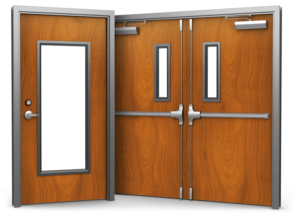
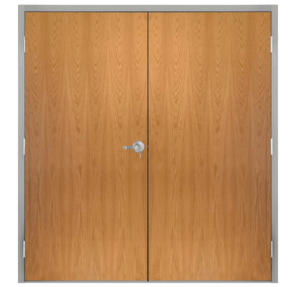
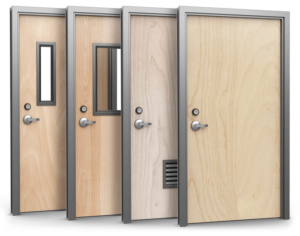
What materials are used in the construction of commercial wood doors?
The construction of commercial wood doors involves several materials that contribute to strength, durability, and aesthetic appeal.
The core material can be a solid core, made from solid wood or composite materials, offering strength and soundproofing. Hollow core doors contain a honeycomb or polystyrene core to reduce weight while maintaining strength and stability. For fire-resistant applications, fire-rated cores, such as gypsum or mineral cores, meet fire safety standards while maintaining the appearance of wood.
The face veneer is typically made of wood veneer, providing the aesthetic look of wood while using less solid wood. The veneer can be stained or painted to achieve various finishes.
The frame construction of commercial wood doors is usually made from solid wood or engineered wood, surrounding the core to provide strength and structure.
In terms of finish, commercial wood doors can be coated with paint, stain, laminate, or UV-cured finishes, which enhance their appearance while offering protection and durability against moisture, UV rays, and wear.
Finally, edge construction often involves reinforcing the edges with solid wood or metal edge banding. This reinforcement prevents wear and enhances durability, making it especially important in high-traffic areas.
What types of core materials are used in commercial wood doors?
Commercial wood doors use several types of core materials designed to provide strength, stability, and performance tailored to different needs. The most common types of core materials include:
- Solid Core: A solid wood core offers excellent strength, soundproofing, and insulation. It’s typically made from a solid piece of wood or composite materials. Solid core doors are ideal for high-traffic areas where durability and noise reduction are priorities.
- Hollow Core: A hollow core door contains a lightweight core, such as a honeycomb structure or polystyrene, that reduces weight without sacrificing strength. This option is more cost-effective and commonly used for applications where soundproofing and fire resistance are less of a concern.
- Fire-Rated Core: For areas that require fire resistance, fire-rated cores are used. These cores, such as those made from gypsum or mineral core, are designed to meet fire safety standards. Fire-rated doors provide the added benefit of maintaining the wood’s aesthetic while offering fire protection.
Each core type is chosen based on the door’s intended use, with considerations for factors like soundproofing, weight, fire resistance, and durability.
How is the finish applied to commercial wood doors?
The finish applied to commercial wood doors plays a crucial role in both the appearance and durability of the door. There are several methods used to apply finishes, depending on the type of finish and the desired outcome:
- Factory-Applied Finish: In many cases, commercial wood doors are finished at the factory before they are shipped. This controlled environment ensures a consistent and high-quality application. The process typically involves applying stains, paints, or laminates to the surface, followed by a protective topcoat or UV-cured finish. Factory finishes provide excellent durability and protection, as they are applied under optimal conditions, often with specialized equipment.
- Field-Finished: In some situations, doors are finished on-site after installation, which allows for greater customization of color or finish to match the surrounding decor. For field finishing, doors are typically primed at the factory and then painted or stained on-site. This process requires additional labor and may be subject to environmental factors such as humidity and temperature, which can impact the final finish.
- UV-Cured Finish: For enhanced durability and minimal maintenance, a UV-cured finish can be applied. This is a type of finish that hardens under ultraviolet light, creating a highly resistant, scratch-proof surface. It provides long-lasting protection against wear and fading, making it ideal for high-traffic areas.
- Laminate Finishes: High-Pressure Laminate (HPL) or Thermally Fused Laminate (TFL) finishes are often applied in a factory setting. These finishes provide a highly durable and resistant surface in various colors and patterns, offering both aesthetic appeal and functional benefits.
The application of the finish can vary based on the type of door and its intended use, but the goal is always to enhance the wood’s appearance while providing protection against moisture, UV rays, scratches, and general wear.
Are commercial wood doors made to be durable?
Yes, commercial wood doors are designed for durability, making them suitable for high-traffic environments. The core material plays a significant role in strength, with solid core doors offering durability and soundproofing, while hollow core doors reduce weight without sacrificing stability. Fire-rated cores are used for added protection in fire-prone areas.
The frame construction of commercial wood doors, typically made of solid or engineered wood, provides extra support and strength. The finish, whether it’s paint, stain, laminate, or UV-cured, protects the door from moisture, scratches, and UV damage, ensuring long-lasting performance.
Additionally, the edges are often reinforced with solid wood or metal edge banding to prevent wear and damage, especially in high-traffic areas. The use of high-quality wood and engineered materials ensures both aesthetic appeal and the strength required for commercial settings.
Can commercial wood doors be customized?
Yes, commercial wood doors can be highly customized to fit specific needs. You can choose from various core materials, including solid core, hollow core, or fire-rated core, depending on the requirements for strength, soundproofing, or fire resistance.
Customization extends to the finish, with options like paint, stain, laminate, or UV-cured finishes in different colors and textures. The size and shape of the door can also be tailored to fit unique openings or architectural designs.
The type of wood veneer or species can be selected to achieve the desired appearance, and edge construction can be customized with solid wood or metal edge banding for added durability. Additionally, hardware and accessories such as handles, locks, or panels can be chosen to match the door’s style and functionality.
Are commercial wood doors fire-rated?
Yes, commercial wood doors can be fire-rated. Fire-rated doors are specially designed to meet fire safety standards and are built to resist the spread of fire and smoke. These doors are typically constructed with fire-resistant cores, such as gypsum, mineral core, or rockwool, which help prevent the door from burning or weakening during a fire.
Fire-rated commercial wood doors are available in a range of fire ratings, from 20 minutes to 90 minutes or more, depending on the specific requirements of the building. They are commonly used in areas where fire safety is crucial, such as corridors, stairwells, and fire exits. The finish and hardware on fire-rated doors must also meet certain fire safety standards to maintain the integrity of the door in the event of a fire.
These doors offer the benefits of both fire resistance and the aesthetic appeal of wood, making them suitable for commercial applications where both safety and design are important.
If you are in need of commercial wood doors, take a look here: Commercial Wood Doors