Can Commercial Wood Doors Be Used for Security Purposes?
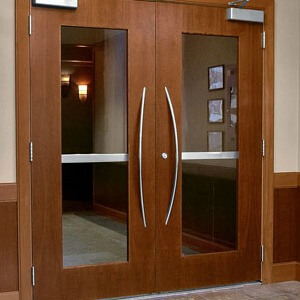
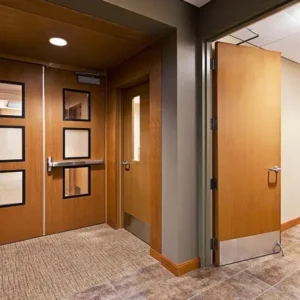
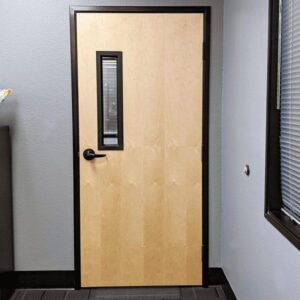
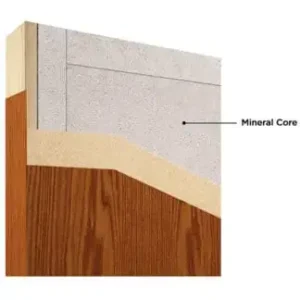
Yes, commercial wood doors can be used for security purposes when properly constructed and equipped. Solid core wood doors, often made with materials like particleboard, stave lumber, or mineral cores, provide strength and durability suitable for many secure environments. When paired with heavy-duty hardware, reinforced frames, and high-security locks, they can offer reliable protection. While not as tamper-resistant as steel doors, they are commonly used in offices, schools, and interior areas where both security and aesthetics are important.

What makes a commercial wood door secure?
A commercial wood door is made secure primarily through its core material, construction quality, and hardware components. Solid core doors, such as those with mineral, particleboard, or stave lumber cores, provide strength and resistance to impact. The door’s frame must also be sturdy, preferably made of metal or reinforced wood, to prevent forced entry. Additionally, heavy-duty hinges, commercial-grade locks, and reinforced strike plates significantly enhance security. Proper installation and routine maintenance further ensure the door performs reliably in protecting a space.
Can commercial wood doors be used in high-security areas?
Commercial wood doors can be used in some high-security areas, but they are generally better suited for moderate-security interior locations. Solid core wood doors provide good strength and durability, especially when paired with high-security locks, reinforced frames, and other protective hardware. However, in environments requiring maximum resistance to forced entry, tampering, or fire, such as banks, detention centers, or exterior access points, steel doors are typically preferred for their superior performance. Wood doors may still be used in high-security areas where aesthetics and moderate protection are both important.
Are commercial wood doors resistant to tampering or forced entry?
Solid core commercial wood doors offer a moderate level of resistance to tampering and forced entry. Their dense core materials, such as particleboard, stave lumber, or mineral core, provide strength and durability, making them more secure than hollow-core or residential-grade doors. However, they are not as resistant as steel doors, which are better suited for high-risk or exterior areas. The level of tamper resistance can be improved with reinforced frames, heavy-duty hardware, and high-security locks, but wood doors may still be more vulnerable to tools like crowbars or battering than their metal counterparts.
How can you enhance the security of a commercial wood door?
You can enhance the security of a commercial wood door by combining strong materials with high-quality hardware and proper installation. Key upgrades include:
- Using a solid core door (such as mineral or stave lumber core) for added strength.
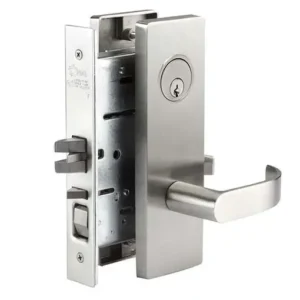
- Installing heavy-duty commercial-grade locks like deadbolts or access control systems.
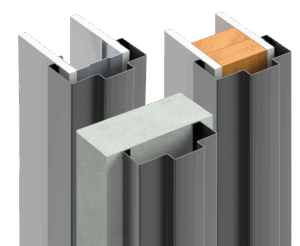
- Reinforcing the door frame with steel or metal reinforcements to resist forced entry.
- Adding security hinges with non-removable pins or continuous hinges to prevent tampering.
- Using reinforced strike plates with long screws anchored into the wall framing.
- Installing door viewers or cameras for added monitoring.
Together, these enhancements greatly improve the door’s ability to resist intrusion and tampering.

Are commercial wood doors used for exterior security?
Commercial wood doors can be used for exterior security, but they are less common than steel or fiberglass doors for this purpose. When used outside, wood doors must be solid core and properly sealed, weatherproofed, and maintained to withstand the elements. They should also be paired with reinforced frames and heavy-duty locks to ensure security. However, due to wood’s natural vulnerability to moisture, warping, and decay over time, steel or fiberglass doors are typically preferred for high-security exterior applications. Wood doors are more often used for interior security where weather exposure is not a concern.
Do commercial wood doors meet fire and safety codes?
Yes, many commercial wood doors are designed to meet fire and safety codes. Fire-rated wood doors typically feature solid cores made of mineral or other fire-resistant materials and can carry ratings of 20, 45, 60, or up to 90 minutes, depending on the construction and certification. These doors must be tested and labeled by a certified agency, such as UL or Intertek (Warnock Hersey), and installed with code-compliant hardware and frames to maintain their rating. When properly specified and installed, commercial wood doors can meet both life safety and building code requirements in a variety of commercial settings.
Are commercial wood doors as secure as commercial metal doors?
Commercial wood doors can be secure, but they are not as secure as commercial metal doors in most situations. While solid core wood doors offer good strength and durability for interior use, metal doors, especially steel doors, provide superior resistance to forced entry, impact, fire, and environmental damage. Metal doors are typically used in high-security and exterior applications due to their tamper resistance, structural integrity, and longevity. However, wood doors are still widely used in commercial settings where aesthetics, noise reduction, and moderate security are priorities. For maximum security, especially in high-risk areas, metal doors are the preferred choice.
If your business is in need of commercial wood doors, take a look at them & get a quote here: Commercial Wood Doors
If you’re in need of commercial metal doors for enhanced security, take a look at them & get a quote here: Commercial Metal Doors
If you have any additional questions about commercial wood doors, email us at [email protected] or give us a call at 800-685-7541 and we’ll be happy to help you out!


