


What is a Single-Louvered Commercial Door?
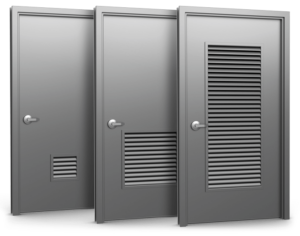
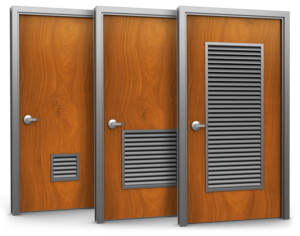
A single-louvered commercial door is either a metal door with one louvered section or a wood door with one louvered section, typically a slatted or perforated metal grille, integrated into the door to allow for airflow between spaces while maintaining security and privacy. Commonly used in mechanical rooms, electrical closets, or storage areas, this type of door helps with ventilation and temperature control without requiring a separate vent. The louver can be fixed or adjustable and is usually positioned in the top or bottom half of the door.
Where are single-louvered doors commonly used?
Single-louvered commercial doors are commonly used in areas where airflow is needed without sacrificing security, such as mechanical rooms, electrical or IT closets, janitorial closets, storage rooms, and utility spaces. They’re also found in commercial buildings like schools, hospitals, office buildings, and industrial facilities to help ventilate equipment or enclosed areas without using separate vents. They’re commonly used in these spaces because they provide necessary ventilation to prevent heat buildup, moisture accumulation, or poor air quality, especially in rooms housing electrical panels, HVAC equipment, or cleaning supplies. The louvered section allows passive airflow between rooms or from a room to a corridor, which can help with temperature control, odor dissipation, and equipment longevity all without the need for separate wall or ceiling vents. They’re a simple and cost-effective way to meet airflow requirements while maintaining a secure, enclosed space.
What materials are louvered doors made from?
Single-louvered commercial doors are most commonly made from hollow metal, typically galvanized steel, stainless steel, or sometimes aluminum, due to their durability, fire-resistance, and suitability for high-traffic or industrial environments. For less demanding settings like offices or light commercial use, they can also be made from solid-core wood or composite materials. The louver inserts themselves are usually metal (either steel or aluminum) to maintain structural integrity and airflow performance.
Do louvered doors meet fire code requirements?
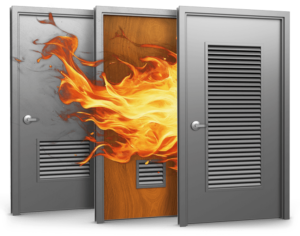
Standard louvered doors do not meet fire code requirements because the open slats compromise the door’s ability to contain fire and smoke. However, fire-rated louvered doors are available – they use fusible link louvers, which are designed to automatically close and seal the vent when exposed to high heat (typically around 135°F). These special louvers help the door maintain its fire-rating (usually 20 to 90 minutes) and can be used where ventilation and fire compliance are both required. Always check with local building and fire codes, as requirements vary by jurisdiction and application.
Can louvers be added to any commercial door?
Louvers can be added to many commercial doors, but not all. It depends on the door’s material, core type, and any required fire rating. For non-rated hollow metal or wood doors, louvers can often be added either at the factory or in the field. However, if the door is fire-rated, the louver must also be fire-rated and installed according to strict code and manufacturer guidelines – usually only at the factory or by a certified technician. Adding a louver improperly can void the door’s warranty or fire rating, so it’s important to verify compatibility first.
Do louvers affect sound or privacy?
Yes, louvers do affect sound and privacy. Because they have open slats or perforations for airflow, they also allow sound to pass through more easily than a solid door, which can reduce acoustic privacy. Additionally, depending on the louver design and placement, there may be limited visual privacy, especially if the louver is large or positioned at eye level. For spaces where noise control or discretion is important (like offices, restrooms, or private meeting rooms), a louvered door may not be ideal unless special acoustic or sight-blocking louvers are used.
Are single-louvered doors secure?
Single-louvered doors provide standard security in most situations, but the louvered section does make them less secure compared to solid, non-louvered doors. The open slats or perforated sections create weak points where intruders could potentially gain access or view into the enclosed space. As a result, louvered doors are typically used in non-sensitive areas like mechanical rooms, storage spaces, or areas where ventilation is the primary concern, rather than in places requiring high security, such as offices with valuable equipment or sensitive information.
If security is a top priority, reinforced louvered doors or security-rated models may be a better choice.
What are the benefits of using a single-louvered commercial door?
The benefits of using a single-louvered commercial door include:
- Improved Ventilation: The louvered design allows air to flow freely between spaces, helping to control temperature, humidity, and moisture buildup in areas like mechanical rooms, storage spaces, or closets.
- Energy Efficiency: By promoting airflow and reducing the need for additional ventilation systems, single-louvered doors can help maintain consistent temperatures and reduce energy costs.
- Cost-Effective Solution: They offer a relatively inexpensive way to meet ventilation needs compared to installing separate vents or air conditioning systems.
- Space-Saving: In confined spaces, a louvered door can serve as both a secure entry and a source of ventilation without the need for bulky external vents or grilles.
- Security with Ventilation: While they aren’t as secure as solid doors, they still offer a level of security for non-sensitive spaces while ensuring airflow, ideal for utility and storage rooms.
Overall, single-louvered commercial doors are a practical and versatile option for businesses that require ventilation and natural light while maintaining a reasonable level of privacy.
Take a look at our wide variety of commercial doors and louver options here: Commercial Doors
If you have any additional questions about commercial doors or louvers, email us at [email protected] or give us a call at 800-685-7541 and we’ll be happy to help you out!