


How Do I Choose the Best Commercial Door For My Business?
Commercial doors are essential components of commercial buildings as they provide security, safety, functionality and aesthetics. They can contribute to the success of a business by creating a positive and welcoming environment for customers and employees. Therefore, it’s crucial to ensure you are choosing the correct commercial door for your business’ needs and priorities. The right door should align with your building’s design, provide the necessary functionality, and meet safety, security, and compliance requirements.
What are the most important factors when choosing a commercial door?
1. Purpose and Function: Access control, safety, energy efficiency, and aesthetics are the key factors influencing the purpose and functionality of a commercial door. Access control determines the level of security required, ensuring only authorized individuals can enter specific areas. Safety is paramount, especially in the event of a fire, with fire-rated doors providing protection. Energy efficiency is another important consideration, as insulated commercial doors can help reduce energy consumption. Finally, aesthetics play a role in creating a positive impression, as a commercial door that complements the building’s design and brand can enhance its overall appeal.
2. Location: The location of the commercial door is another crucial factor in selecting the appropriate type. Whether the door will be installed indoors or outdoors will influence its need for weatherproofing and durability. Additionally, the level of traffic the door will experience is important, as high-traffic areas may require heavier-duty doors to withstand frequent use.
3. Material: Commercial doors are available in a variety of materials, each with its own advantages and disadvantages. Steel doors are known for their durability and security, making them popular choices for exterior applications. Aluminum doors, on the other hand, are lightweight and corrosion-resistant, suitable for both interior and exterior use. Wood doors offer a more traditional aesthetic but may require more maintenance. Finally, glass doors provide natural light but may need additional security features to protect against break-ins.
4. Size and Dimensions: You’ll of course need to ensure that the door fits properly to prevent gaps and drafts. Measure the opening of the doorway to determine the size of the door needed.
5. Hardware and Locks: The required level of security should be a primary consideration when selecting commercial doors. This will determine the necessary security features, such as deadbolts, panic bars, or electronic access controls. Additionally, ease of use is important, as hardware that is difficult to operate can inconvenience employees and customers.
6. Budget: Consider the initial cost of the door, as well as long-term maintenance and energy costs.
By carefully considering these factors, you can choose the right commercial door to meet your business’s specific needs and enhance its overall functionality and aesthetics. Remember, the main purpose of a commercial door is to provide safety, regulate access to specific areas within a building, contribute to aesthetics and the overall appearance of the building and be able to withstand heavy use and abuse. You’ll want to ensure the commercial door you choose meets your business’ needs for each of those categories.
Should I choose a wood, metal or glass commercial door?
When deciding between a wood, metal, or glass commercial door, the best choice depends on your business’s specific needs, style preferences, and the environment in which the door will be installed.
Wood doors are an excellent option for businesses that value a warm, professional, and timeless appearance. They’re commonly used in offices, hotels, medical suites, schools, churches, and other spaces where aesthetics matter. Wood doors can be customized in terms of finish, paneling, and hardware to complement the design of your building. However, they do require occasional maintenance such as refinishing or sealing, and while they hold up well indoors, they may not be the best choice for high-moisture or industrial settings. If you’re looking for a door that enhances your space’s look and feel—especially for interior or formal areas—a commercial wood door is a great choice.
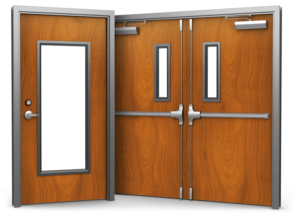
Metal doors, typically made from steel or aluminum, are the go-to for high-durability and high-security environments. They’re perfect for warehouses, schools, back-of-house areas in retail stores, loading docks, and other heavy-traffic or industrial areas. Commercial metal doors are highly durable, fire-rated, weather-resistant, and often more cost-effective in the long run due to their low maintenance needs. While they may lack the visual warmth of wood, they make up for it in performance and safety. Keep in mind that they can be prone to dents or scratches with impact and may require reinforced frames or hardware due to their weight.

Glass doors are ideal for storefronts, lobbies, showrooms, and modern office spaces. They create a clean, open, and contemporary look, and allow natural light to flow into your space, which can help make it more inviting to both customers and staff. Glass doors are especially useful in retail or hospitality environments where visibility and presentation are key. That said, they may require frequent cleaning and may not provide as much privacy unless frosted or tinted. For safety and durability, always ensure they’re made from tempered or laminated glass. Glass doors are best when you want to showcase your interior space and make a striking first impression.
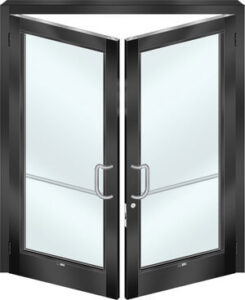
In some cases, a combination of materials may offer the best of both worlds. For example, you might choose a metal door with a wood veneer for a high-end look with added durability, or a wood door with a glass panel for visual interest and visibility.
Ultimately, your decision should be guided by the door’s purpose, the level of traffic it will handle, your desired aesthetic, and any safety or code requirements. If you’re outfitting multiple areas of a building, mixing and matching door types across different spaces can also be a smart solution.
How do I know if I need a fire-rated door?
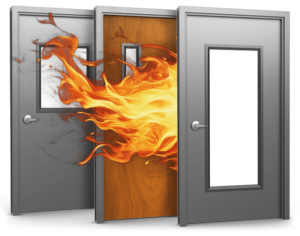
You may need a fire-rated door if your business operates in a commercial building where fire safety codes and regulations apply. These doors are specially designed to slow the spread of fire and smoke, giving occupants more time to evacuate and protecting critical areas of the building. The best way to determine if a fire-rated door is required is to consult local building codes and fire safety regulations, which often mandate them in certain locations—such as stairwells, corridors, exits, utility rooms, and areas that connect different sections of a building.
Fire-rated doors are commonly required in multi-tenant buildings, schools, healthcare facilities, warehouses, and any business that handles flammable materials. If your space is being inspected for occupancy or building permits, inspectors will likely check for compliance with fire door requirements. Working with a licensed contractor or door supplier familiar with local code can also help ensure that the correct fire-rated doors are installed where needed.
In short, if your door is located in a high-risk or high-traffic area (or if it serves as part of a fire barrier) it likely needs to be fire-rated. These doors come with ratings based on how long they can resist fire (such as 20, 45, 60, or 90 minutes) and must be installed with compatible fire-rated frames and hardware to maintain their certification.
Can commercial doors help with energy efficiency?
Yes, commercial doors can play a key role in improving a building’s energy efficiency. Energy-efficient doors are designed to minimize heat transfer, helping maintain indoor temperatures and reducing the load on your HVAC system. This is especially important for exterior doors that separate conditioned interior spaces from outdoor elements. Doors with insulated cores, such as polyurethane or polystyrene-filled metal doors, help reduce air leakage and heat loss, keeping warm air inside during the winter and cool air in during the summer. Even commercial wood doors can contribute to energy savings when specified with insulation and proper weatherstripping. Glass doors can also be energy efficient if they feature double glazing, low-emissivity (Low-E) coatings, or thermal breaks. Additionally, choosing doors with tight seals and quality installation helps prevent drafts and energy waste. Over time, investing in energy-efficient commercial doors can lower utility bills and support a more sustainable, comfortable environment for your customers and employees.
Are there commercial doors that help with soundproofing?
Yes, soundproof commercial doors, also known as acoustically rated doors, are specially designed to reduce noise transfer between rooms or from outside sources. These doors are commonly used in offices, schools, hospitals, recording studios, conference rooms, law firms, and any other environment where privacy, focus, or reduced noise is important. They are typically built with solid cores (often mineral core or acoustic-rated core materials) and may include added seals, thresholds, and door sweeps to block sound leakage around the frame. Some models are tested and rated with STC (Sound Transmission Class) scores, which measure how effectively the door blocks sound. A higher STC rating means better sound isolation—standard doors may have an STC rating around 25-30, while acoustically engineered doors can range from 40 to 55 or higher. In addition to the door itself, using acoustic hardware and proper installation is essential to achieving optimal performance. If your business needs to minimize distractions, protect sensitive conversations, or create a more peaceful environment, soundproof commercial doors are a smart investment.
How do I ensure the door meets local building codes?
To ensure your commercial door meets local building codes, the first step is to understand the specific requirements in your area. Building codes vary by city, state, and type of occupancy, so it’s important to reference local regulations or consult with your city’s building department. These codes typically address fire ratings, accessibility (ADA compliance), egress requirements, door swing direction, hardware, and in some cases, energy efficiency or acoustics. Working with a licensed contractor, architect, or commercial door supplier familiar with local codes is one of the best ways to ensure compliance. They can recommend the correct type of door—such as a fire-rated model for certain corridors or exits—and ensure that all components, including frames, closers, locks, and panic hardware, meet the standards. It’s also crucial that the door is installed properly by a qualified professional, as even a compliant door can fail inspection if it’s not mounted correctly. Keeping documentation, such as fire-rating labels and manufacturer specifications, will also help during building inspections or permitting processes.
What’s the average cost of a commercial door?
The cost of a commercial door typically ranges from $300 to over $2,500, depending on several key factors. Basic hollow metal doors without custom features can start around $300 to $800, making them one of the most affordable and durable options—commonly used in warehouses, utility rooms, and back entrances. Commercial wood doors, which offer a more upscale, professional look, usually fall in the $500 to $1,500 range depending on the wood type, core construction, and finish. Glass storefront doors or aluminum-framed glass doors tend to be more expensive, averaging between $1,000 and $2,500 or more, especially if you add features like tempered or insulated glass, custom hardware, or decorative framing.
Additional costs can include fire ratings, acoustic ratings, or specialized hardware like panic bars, access control systems, or automatic closers. Installation costs also vary based on complexity but often add $200 to $800+ per door, especially if structural modifications or electrical work are needed.
Ultimately, your total cost will depend on the type of door you choose, the level of customization, and the performance features required for your business. While upfront price matters, it’s also smart to factor in durability, maintenance, and energy savings over time.
Take a look at our wide variety of commercial doors & get a quote here: Commercial Doors
If you have any additional questions about commercial doors or need help choosing one for your business, email us at [email protected] or give us a call at 800-685-7541 and we’ll be happy to help you out!