


Commercial wood doors offer moderate soundproofing capabilities, especially when constructed with solid cores and fitted with appropriate seals. Solid core wood doors can significantly reduce noise transmission compared to hollow core doors, making them suitable for offices, conference rooms, and other spaces requiring privacy. To enhance soundproofing, these doors can be paired with acoustic gasketing and door sweeps. However, for environments demanding higher noise reduction, specialized acoustic doors or materials may be more effective.


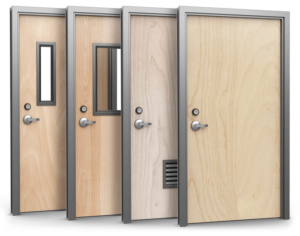
Do commercial wood doors provide good soundproofing?
Commercial wood doors can provide good soundproofing when they have a solid core and are properly sealed. Solid core wood doors reduce noise better than hollow core doors, making them effective for many commercial spaces where privacy and noise control are important. However, their soundproofing is generally moderate compared to specialized acoustic doors.
How much noise can a commercial wood door block?
A solid core commercial wood door typically has a Sound Transmission Class (STC) rating between 28 and 35, meaning it can block moderate levels of noise such as normal speech or office sounds. Higher STC ratings indicate better soundproofing, but standard wood doors generally don’t block very loud or low-frequency noises as effectively as specialized acoustic doors.
What affects the soundproofing performance of commercial wood doors?
The soundproofing performance of commercial wood doors is influenced by several factors, including the door’s core type (solid cores block more sound than hollow cores), thickness, quality of seals and gasketing around the door, and proper installation to prevent gaps. Additionally, the door frame and surrounding wall construction also play a crucial role in overall noise reduction.