


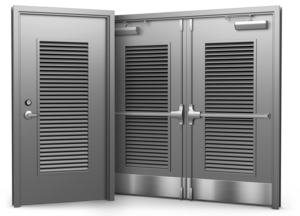
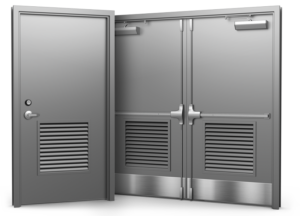
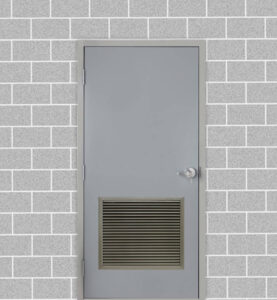
A commercial door with louvers is a door that features built-in slatted openings, or louvers, designed to allow air to flow through while maintaining privacy and security. These doors are commonly used in mechanical rooms, electrical closets, restrooms, and other spaces that require ventilation without compromising the integrity of the door. Louvers help regulate temperature, reduce moisture buildup, and ensure proper air circulation, making them ideal for commercial and industrial applications where airflow is essential.

Where are louvered commercial doors typically used?
Louvered commercial doors are typically used in areas where ventilation is necessary without sacrificing door security or privacy. Common locations include:
- Mechanical rooms – to allow airflow for HVAC systems or equipment cooling.
- Electrical closets – to prevent overheating of electrical panels and components.
- Restrooms – to support air circulation and odor control.
- Janitor closets – to reduce moisture buildup from stored cleaning supplies.
- Storage rooms – especially those containing chemicals or equipment that generate heat.
- Data & server rooms – in some cases, to assist with passive cooling.
These doors are ideal in any commercial or industrial setting where maintaining airflow is important while keeping spaces secure and enclosed.
What are the benefits of louvers in a door?
Louvers in commercial doors offer several valuable benefits, particularly in spaces that require ventilation without compromising privacy or security. One of the primary advantages is improved airflow. Louvers allow air to circulate between rooms, which helps ventilate enclosed spaces and can eliminate the need for separate duct systems. This is especially useful in areas like mechanical rooms, restrooms, and janitor closets, where stagnant air or odors can be an issue.
In addition to promoting ventilation, louvers help regulate temperature and reduce moisture buildup. This is critical in rooms that house HVAC or electrical equipment, as consistent airflow helps prevent overheating and supports overall system efficiency. Louvers can also aid in odor control by helping to disperse and refresh air in confined areas.
Another key benefit is that louvers are designed to maintain privacy and security. Many louver styles limit visibility through the door, allowing airflow while keeping the interior space hidden. Louvers may also contribute to energy efficiency by reducing the workload on HVAC systems, making them a practical and functional solution for many commercial settings.

Do louvered doors affect fire safety?
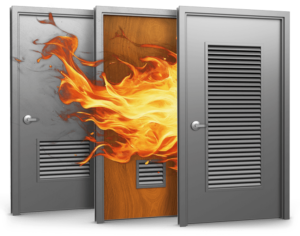
Yes, louvered doors can affect fire safety, but it depends on the type of louvers used. Standard louvers are not fire-rated and can compromise a door’s ability to contain flames and smoke in the event of a fire. However, fire-rated louvers are specifically designed and tested to maintain a door’s fire resistance. These specialized louvers have fusible links or intumescent materials that automatically close or seal off the opening when exposed to high temperatures, helping to preserve the door’s fire barrier.
To ensure fire safety, building codes often require that any louvered door used in a fire-rated assembly must be equipped with certified fire-rated louvers. It’s important to choose the right type based on local codes and the door’s intended fire rating. Always consult with a door hardware professional or code official when specifying louvered doors for fire-rated applications.
Are commercial louvered doors energy efficient?
Commercial louvered doors can support energy efficiency in certain applications, but their efficiency depends on how and where they are used. Because louvers allow air to pass through, they can reduce the need for mechanical ventilation in rooms like electrical closets, mechanical rooms, or janitor spaces—helping to lower HVAC energy consumption.
However, standard louvered doors are not airtight, which means they may not be ideal for temperature-controlled areas or spaces where insulation is critical. In such cases, they can contribute to energy loss if not properly designed or installed. To improve efficiency, some louvered doors feature insulated or adjustable louvers that help balance ventilation with thermal performance.
Ultimately, louvered doors are most energy efficient when used strategically—in areas that benefit from passive airflow and where maintaining a tight thermal envelope is not a priority.
Can louvers be added to existing commercial doors?
Yes, louvers can be added to existing commercial doors, but it should be done carefully and professionally. Retrofitting a door with louvers involves cutting an opening and installing a louver kit that fits securely and maintains the structural integrity of the door. This can be a practical solution when increased ventilation is needed in a space that wasn’t originally designed for it.
However, not all doors are suitable for modification—especially fire-rated doors. If the door is fire-rated, any louver added must also be fire-rated and installed according to code, or the door’s fire certification will be voided. In these cases, it’s essential to work with a qualified installer or door manufacturer to ensure compliance with safety standards.
What materials are used for louvered doors?
Louvered commercial doors are typically made from durable materials designed to withstand heavy use and meet building requirements. The most common materials include:
- Hollow Metal: Steel doors with integrated metal louvers are highly durable, fire-resistant, and commonly used in industrial and utility settings. Galvanized or stainless steel may be used for added corrosion resistance.
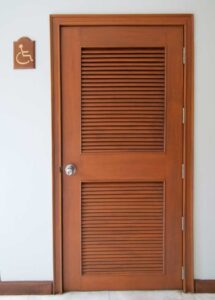
- Wood: Solid-core wood doors can feature wood or metal louver inserts. These are often used in office buildings, schools, or restrooms where aesthetics are important along with ventilation. See commercial wood doors with louvers.
- Aluminum: Lightweight and corrosion-resistant, aluminum louvers are sometimes used in both metal and wood doors for their strength and low maintenance.
- Composite or Laminate: In specialty applications, such as cleanrooms or areas requiring specific hygiene standards, composite doors with louver options may be used.
Louver inserts themselves are usually made of steel or aluminum, chosen for their strength, airflow performance, and ability to be fire-rated when necessary. The combination of materials depends on the specific environment, performance needs, and safety codes.
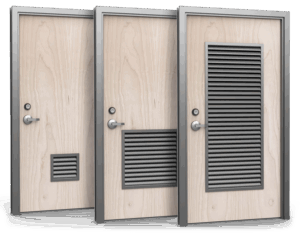
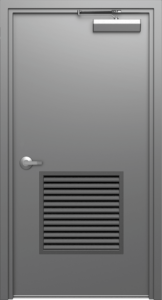
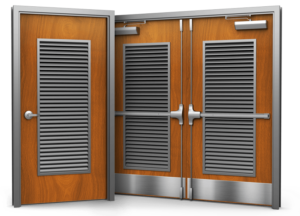
If you are in need of commercial metal door with louvers, take a look here: Commercial Metal Doors with Louvers
If you are in need of commercial wood door with louvers, take a look here: Commercial Wood Doors with Louvers
If you have any additional questions about commercial louvered doors, email us at [email protected] or give us a call at 800-685-7541 and we’ll be happy to help you out!