


Commercial wood doors are not inherently weatherproof, but they can be made weather-resistant with the right construction and treatments. Exterior-grade wood doors typically feature durable core materials, weatherstripping, and protective finishes to withstand moisture, temperature changes, and UV exposure. However, without proper sealing and maintenance, wood can warp or deteriorate over time. For high-exposure areas, additional weatherproofing or alternative materials like fiberglass or metal doors may offer better long-term performance.

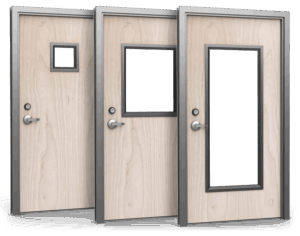

What features help make commercial wood doors more weather-resistant?
Features that help make wood doors more weather-resistant include:
- Weatherstripping: Seals gaps around the door to block moisture, air, and drafts.
- Protective Finishes: UV-resistant paints or sealants help shield the wood from sun damage, moisture, and decay.
- Engineered or Solid Core Construction: Provides better structural stability and resistance to warping compared to hollow or low-grade cores.
- Edge Sealing: Sealed or capped edges prevent water infiltration at vulnerable points.
- Proper Installation: Ensures tight seals, correct alignment, and adequate drainage to reduce exposure to the elements.
- Overhangs or Awnings: While not part of the door itself, architectural features that protect the door from direct rain and sun can significantly extend its lifespan.
Can commercial wood doors be used for exterior applications?
Yes, commercial wood doors can be used for exterior applications, but they must be specifically designed and treated for outdoor use. Exterior-grade wood doors typically feature weather-resistant cores, sealed edges, and durable finishes to protect against moisture, temperature changes, and UV exposure. Proper installation and routine maintenance, such as sealing and refinishing, are also essential to ensure long-term performance and prevent warping or deterioration.
How often do exterior wood doors need maintenance?
Exterior wood doors typically need maintenance every 1 to 2 years, depending on climate and exposure to the elements. Regular upkeep includes inspecting for signs of wear, cleaning, and reapplying a protective finish or sealant to prevent moisture damage, UV fading, and warping. In harsher environments, such as areas with intense sun, heavy rain, or high humidity, more frequent maintenance may be necessary to keep the door in good condition.
What are alternatives if maximum weatherproofing is needed?
If maximum weatherproofing is needed, the best alternatives to commercial wood doors include fiberglass doors and metal doors.
Fiberglass doors are an excellent alternative to wood when maximum weatherproofing is required. They are highly resistant to moisture, humidity, and temperature fluctuations, making them ideal for exterior use in harsh or variable climates. Unlike wood, fiberglass will not warp, crack, or rot over time, even with constant exposure to the elements. These doors can also be manufactured to mimic the look of natural wood, offering aesthetic appeal without sacrificing durability. Additionally, fiberglass doors typically require very little maintenance and offer good insulation, which can improve energy efficiency in commercial buildings.
Metal doors, particularly steel and aluminum, are another strong alternative for environments where superior weather resistance is essential. Steel doors are known for their strength, security, and resistance to warping and water infiltration. They are often insulated with a core material that enhances thermal performance and energy efficiency. Aluminum doors, while lighter than steel, are corrosion-resistant and highly durable, making them ideal for storefronts or high-traffic exterior entrances. Both materials stand up well to the elements and require minimal upkeep, offering long-lasting protection and performance in even the most demanding weather conditions.
These alternatives generally require less maintenance than wood and provide better long-term performance in harsh or variable weather conditions.